openar.art
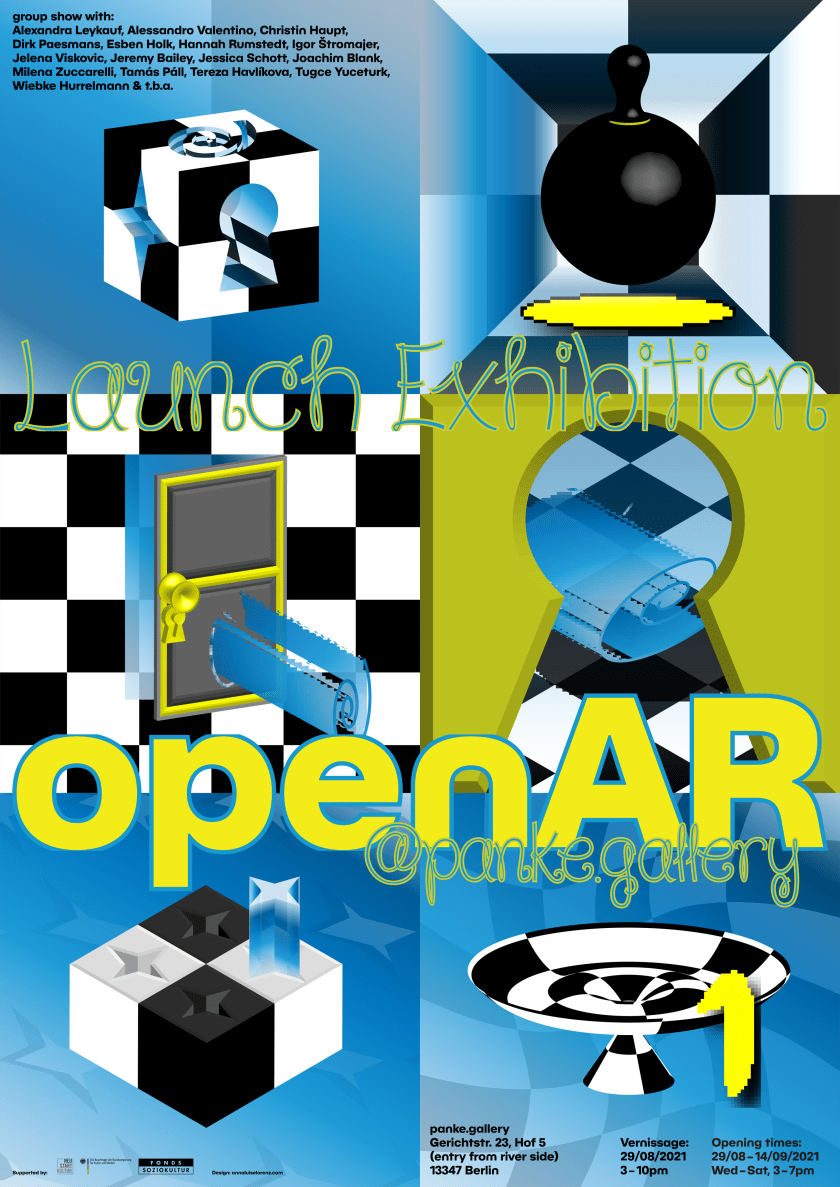
platform launch & group show
panke.gallery, Berlin
opening: 29 August 2021, 3–10 pm
exhibition: 29 August – 14 September 2021
(open: Wednesday–Saturday, 3–7 pm)
artists:
Alexandra Leykauf, Alessandro Valentino, Christin Haupt, Dirk Paesmans, Esben Holk, Hannah Rumstedt, Igor Štromajer, Jelena Viskovic, Jeremy Bailey, Joachim Blank, Milena Zuccarelli, Tamás Páll, Tereza Havlíkova, Tuğçe Yücetürk, Wiebke Hurrelmann & t.b.a.
panke.gallery
concept: Sakrowski / Jeremy Bailey
coding: Vincent van Uffelen
design: Larissa Wunderlich
poster/batches design: Anna Luise Lorenz
infrastructure: !Mediengruppe Bitnik
contributors: Ela Kagel, Noemi Garay
↓ Cube.Zero ↓

ŠTROMAJER 1996 – SAKROWSKI 2021
Dimensions: 1m³ (1×1×1 m)
Edition of 3
Price: € 3000
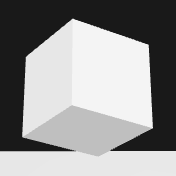
In 1996, Štromajer used an animated gif of a spinning cube in his first net art work 0.html. 25 years later, Sakrowski reprogrammed and remodeled it into an augmented reality artwork.

On the occasion of the launch of the new platform openar.art, panke.gallery presents a hybrid group exhibition with experimental Augmented Reality works. The open platform makes it easy to exhibit, collect and discuss Augmented Reality works and allows artists to sell their works as NFTs. Since the platform is organized as a cooperative, profits will be shared among the artists. As part of the project openAR, the exhibition and platform have been developed in collaboration between workshop participants and digital artists Jeremy Bailey, Sarah Buser and Tamás Páll. The works examine the possibilities of AR technology in artistic applications. Visual, acoustic and performative Augmented Reality formats can be experienced in the exhibition.
Supported by Neustart Kultur & Canada Council for the Arts


 intima.org · Igor Štromajer