
└⦿✚⦿┘
DE-ALGO ID #01000110
De-Algorithmized Identity No. 01000110
by Igor Štromajer
[test exhibition]
📍 forest
8-28 February 2026
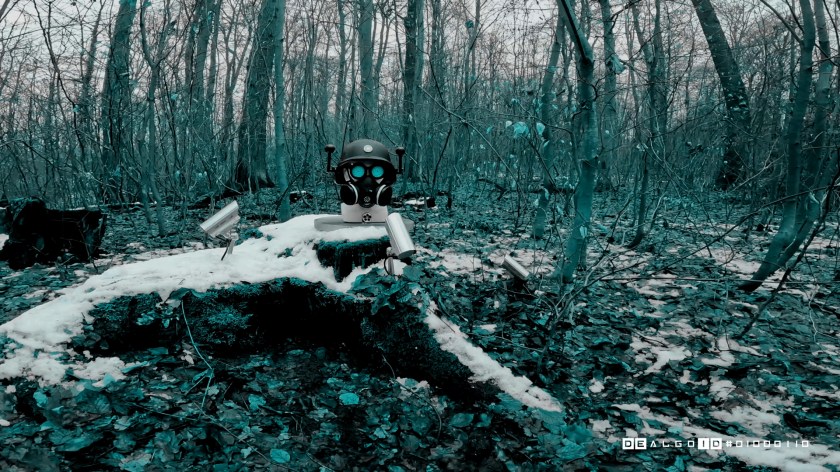
Forest Intervention
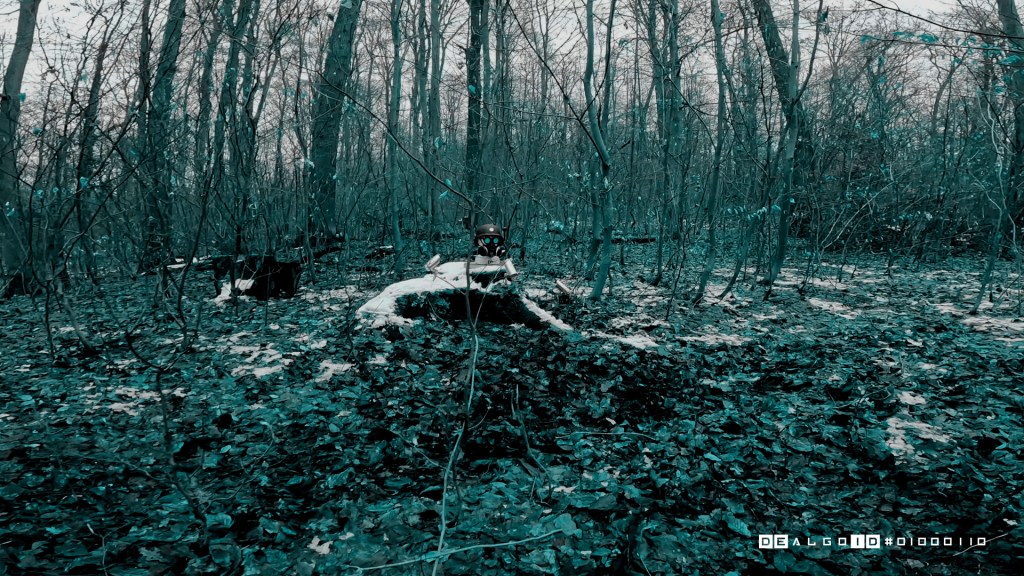
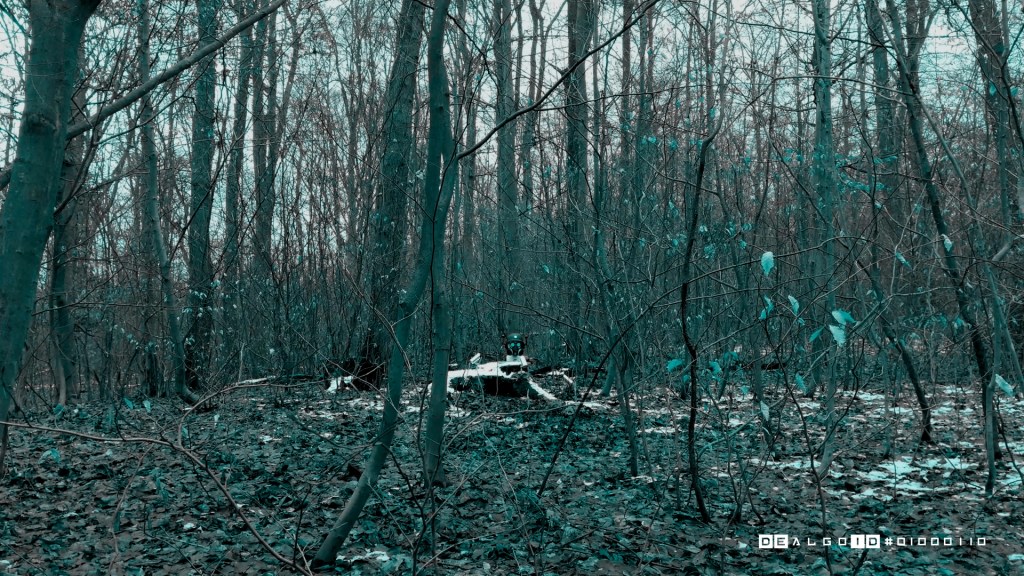
Location & Context: The exhibition is situated deep within a forest, positioned at one of the rotating axis of Europe, where human presence is rare to non-existent, characterized by a lack of infrastructure, the absence of maintained paths, and an a-semiotic indifference to human-centric art protocols.
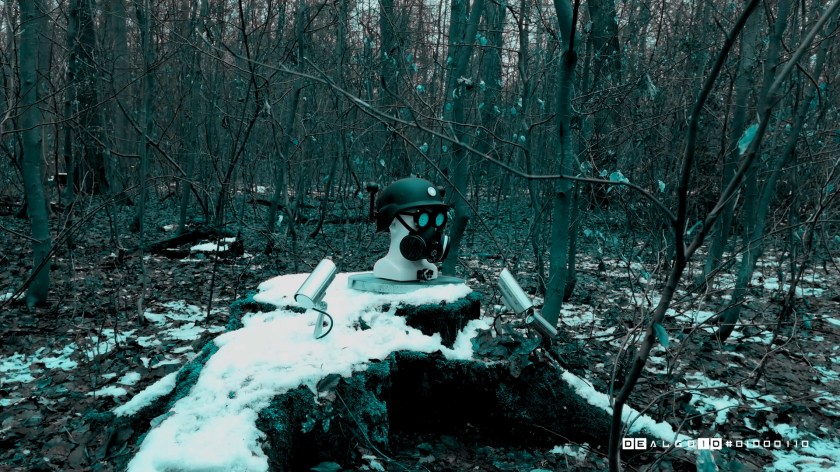
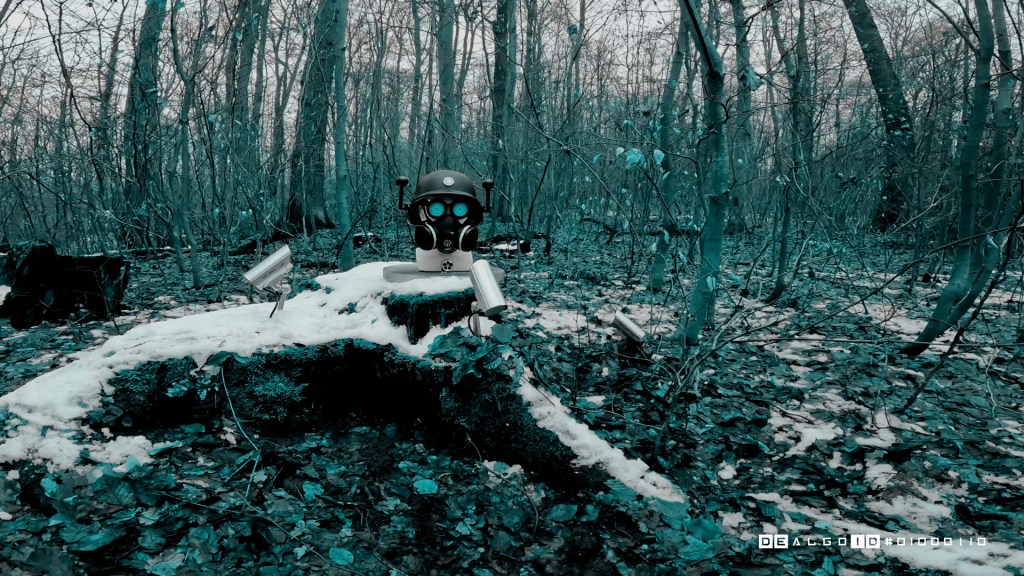
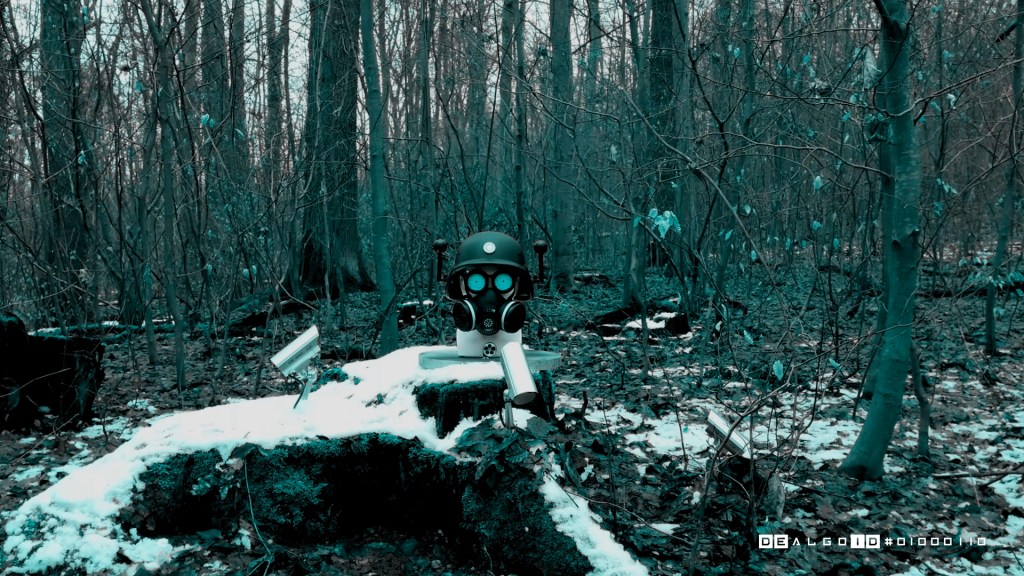
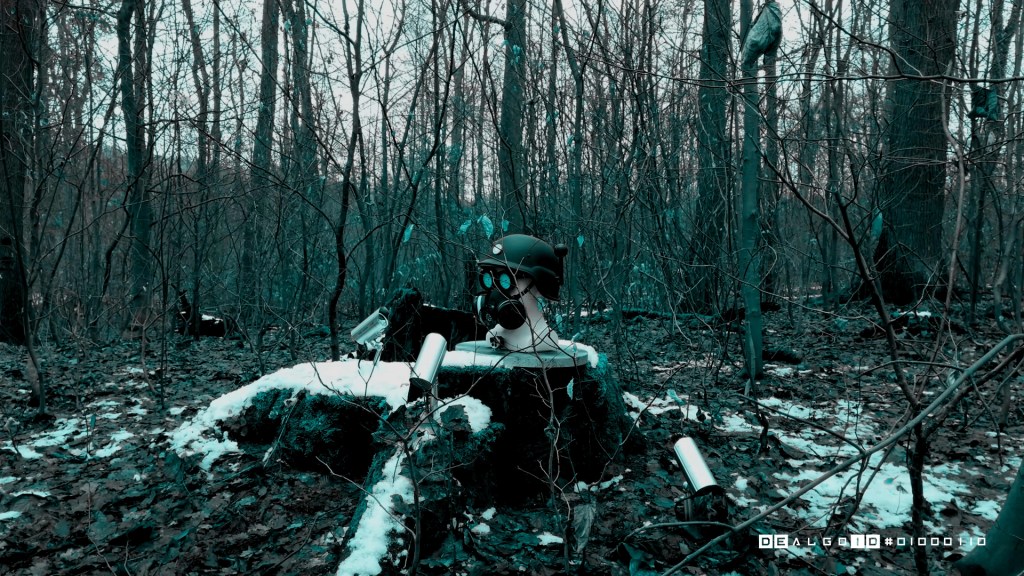
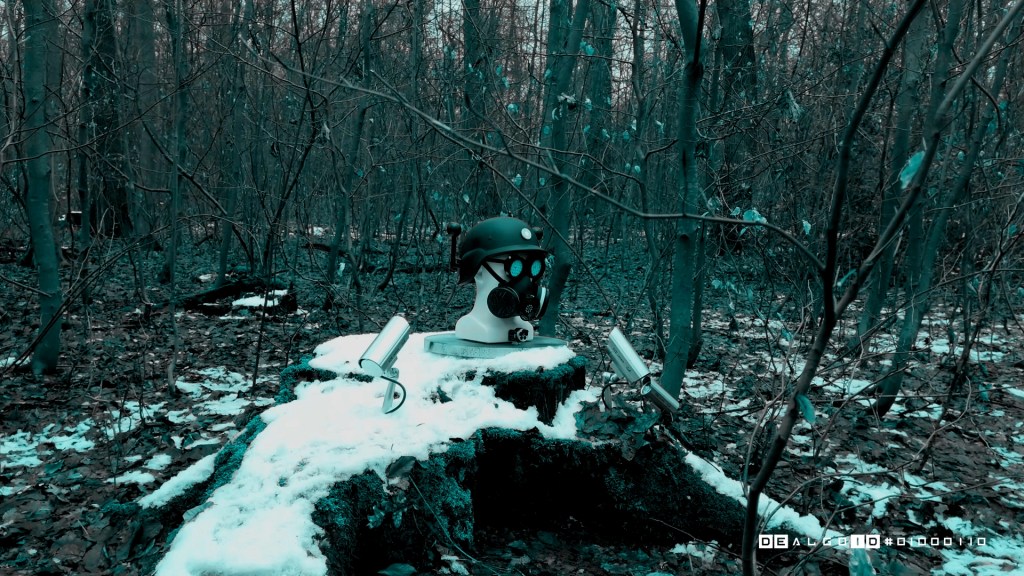
The Object: The central element is a de-digitalized sculptural installation derived from Štromajer‘s social media profile picture. Since 2014, he has used various iterations of the same profile image across all his social media accounts.
– Materiality: The image has been translated into a sculpture, a three-dimensional, analog form using industrial materials.
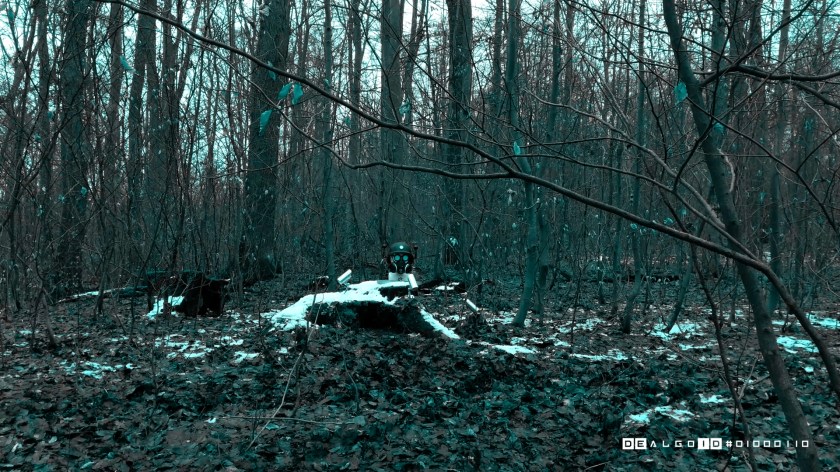
– Scale: The proportions are calibrated to exist in a 1:1 ratio with the surrounding environment, ensuring the object integrates into the forest landscape rather than dominating it.
Timing: The timing, February, is critical. The transitional state of the flora, the cold atmosphere, and the lingering patches of snow among the mud and dampness provide a neutral, non-decorative backdrop. Rather than standing in contrast to its surroundings, the object integrates into this grey light and saturation. It dissolves into the void of the late-winter forest, becoming a seamless part of the landscape’s stillness and material weight.
Spatial Configuration
– Placement: The sculpture is positioned within a cluster of non-human entities and indifferent, non-artistic matter (trees, rocks, undergrowth). Its placement mimics the formal logic of an exhibition space but is fundamentally devoid of any artistic infrastructure. To the forest, the sculpture is not a work of art, but merely another object with a specific mass and temperature. A tree does not touch it with admiration, it rubs against it simply because it occupies space. Indifferent matter does not attempt to read the sculpture. To a rock, this object means nothing. This silence, this total unresponsiveness of the environment to artistic intent, is what definitively de-digitalizes the sculpture. When matter is indifferent, the object finally becomes autonomous. It no longer needs to perform. In a gallery, the object is a slave to the visitor’s gaze. In an indifferent forest, it simply is.
– Access: There are no markers, signs, or directions provided.
– Absence of Protocol: The exhibition does not have an opening or a designated viewing protocol for human visitors, nor does it provide one for non-human entities. It does not seek an audience, it merely occupies space.
Non-Human Interaction
The exhibition is structured to exist primarily for the environment, without the requirement of being seen.
– Analog Persistence: The object exists in a state of total disconnect from the human feedback loop. It stands as a physical remainder of a digital identity that has ceased to transmit, in a space that no longer requires interpretation.

From Binary Identity to Silent Entropy
The exhibition DE-ALGO ID #01000110 represents a strategic ontological shift from binary identity to silent entropy.
Entropy as Information Exit
In this context, entropy is not understood as the physical decay of a sculpture in the forest. Rather, it is the transition from a digital state (ordered, networked, and indexed) to an analog state (autonomous, silent, and material). Digital identity is a trap of high-order organization, it is a slave to the algorithm. By translating the profile picture into a three-dimensional industrial object and placing it in an a-semiotic environment, the image undergoes an entropic transformation. It loses its bit-value and gains mass-value. It is no longer a signal, it is a noise that the network can no longer filter. Its duration is its only performance.
The Rejection of the Human Gaze
Art made for humans is a structural error born of anthropocentric narcissism. The gallery-museum complex is merely a feedback loop for human validation. By placing the sculpture deep within a forest, the work systematically excludes the human consumer. This is a deliberate de-algorithmization of the self. If the digital profile is meant to be seen and liked, this analog sculptural iteration is meant to be ignored.
The Genealogy of De-digitalization: Ritual, Material, and Code
De-digitalization, the transition from the binary to the analog, is not a sudden pivot, but the next stage of a long-term tactical withdrawal from the digital field. This process is defined by three distinct phases of erasure and translation:
– The Ritual Deletion (Expunction):
In 2011, the project Expunction established the fundamental premise: the right to create is inextricably linked to the right to delete. By ritually expunging 101.72 MB of net art, 37 projects produced over a decade, the work moved from the screen to the archive of absence. This was not an act of destruction, but a recognition of the natural cycle of birth and death within technical systems. Since digital memory is inherently fraudulent, a deceptive, fabricated image of the past, erasure is the only path to an authentic state. The empty slot and the documentation of what is no longer there tell more about the original than the digital file ever could.
– The Material Remains (Dead Tech):
The process continued with the physical interrogation of hardware. The series 101.72 MB (2024) treated motherboards, processors, and magnetic tapes not as tools, but as vessels of intimate, fading memories. These dead machines once processed and transmitted the very art that was deleted in 2011. Now, they are stripped of their functionality. Like the software they once ran, the hardware is inexorably losing its purpose. This stage of de-digitalization posits that art exists not only in the concept but in the physical tools: when the tool dies, the art enters a state of material persistence, no longer performing for the user.
– The Code Translation (Unicode Poetry):
The poems (1996-2007; 2011/2024) served as a bridge between the binary and the analog through semi-automatic conversion. By transforming .jpg and .gif fragments of deleted works into the Unicode Encoding Standard, the image was forced into text. This was a deliberate attempt to liberate information from the clutches of techno-capitalist structures. The resulting poems are analog leftovers, the visual reduced to the symbolic, the pixel reduced to a character, preparing the way for the final transition into physical mass.
└⦿✚⦿┘
DE-ALGO ID #01000110
razalgoritmizirana identiteta št. 01000110
Igor Štromajer
[testna razstava]
📍 gozd
8. – 28. februar 2026
Gozdna intervencija
Lokacija in kontekst: Razstava je postavljena globoko v gozdu, na eni od rotacijskih osi Evrope, kjer je človeška prisotnost redka ali sploh neobstoječa. Zaznamujejo jo pomanjkanje infrastrukture, odsotnost urejenih poti in pomenska indiferentnost do antropocentičnih umetniških protokolov.
Objekt: Osrednji element je dedigitalizirana kiparska instalacija, izpeljana iz Štromajerjeve profilne slike na družbenih omrežjih. Od leta 2014 na vseh svojih profilih uporablja različne iteracije iste podobe.
– Materialnost: Podoba je prevedena v skulpturo, v tridimenzionalno, analogno obliko z uporabo industrijskih materialov.
– Merilo: Proporci so umerjeni tako, da obstajajo v razmerju 1:1 z okolico, kar zagotavlja, da se objekt integrira v gozdno krajino, namesto da bi dominiral nad njo.
Čas: Izbira meseca februarja je ključna. Prelomno stanje flore, hladno ozračje in zaplate snega, ki vztrajajo sredi blata in vlage, zagotavljajo nevtralno, nedekorativno ozadje. Objekt ne deluje kot kontrast okolici, temveč je integriran v to sivo svetlobo. Raztopi se v praznini poznozimskega gozda ter postane neopazen del mirovanja in materialne teže krajine.
Prostorska konfiguracija
– Postavitev: Skulptura je umeščena znotraj skupka nečloveških entitet in indiferentne, neumetniške materije (drevesa, skale, podrast). Njena umestitev posnema formalno logiko razstavnega prostora, vendar je temeljno izpraznjena kakršnekoli umetniške infrastrukture. Za gozd skulptura ni umetniško delo, temveč zgolj še en objekt s specifično maso in temperaturo. Drevo se je ne dotika z občudovanjem, temveč se ob njo drgne preprosto zato, ker zaseda prostor. Indiferentna materija ne poskuša brati skulpture. Za skalo ta objekt ne pomeni ničesar. Tišina, popolna neodzivnost okolja na umetniški namen je tisto, kar skulpturo dokončno dedigitalizira. Ko je materija indiferentna, objekt končno postane avtonomen. Ni mu več treba performirati. V galeriji je objekt suženj obiskovalčevega pogleda. V indiferentnem gozdu preprosto je.
– Dostop: Ni nikakršnih oznak, znakov ali usmeritev.
– Odsotnost protokola: Razstava nima otvoritve ali določenega protokola ogleda za človeške obiskovalce, prav tako ga ne predvideva za nečloveške entitete. Ne išče občinstva, temveč zgolj zaseda prostor.
Nečloveška interakcija
Razstava je strukturirana tako, da obstaja prvenstveno za okolje, brez zahteve po tem, da bi bila videna.
– Analogna persistenca: Objekt obstaja v stanju popolne odrezanosti od človeške zanke povratnih informacij. Stoji kot fizični ostanek digitalne identitete, v prostoru, ki ne zahteva interpretacije.
Od binarne identitete do tihe entropije
Razstava DE-ALGO ID #01000110 predstavlja strateški ontološki premik od binarne identitete k tihi entropiji.
Entropija kot izhod iz informacij
Entropija v tem kontekstu ni razumljena kot fizično propadanje skulpture v gozdu. Gre predvsem za prehod iz digitalnega stanja (urejenega, omreženega in indeksiranega) v analogno (avtonomno, tiho in materialno). Digitalna identiteta je past visoko urejene organizacije, je sužnja algoritma. S prevodom profilne slike v tridimenzionalni industrijski objekt in z njegovo umestitvijo v okolje brez pomena, je podoba podvržena entropični transformaciji. Izgubi svojo bitno vrednost in pridobi masno vrednost. Ni več signal, ampak je šum, ki ga omrežje ne more več filtrirati. Njeno trajanje je njen edini performans.
Zavrnitev človeškega pogleda
Umetnost, ustvarjena za ljudi, je strukturna napaka, rojena iz antropocentričnega narcisizma. Kompleks galerij in muzejev je zgolj zanka povratnih informacij za človeško potrditev. S postavitvijo skulpture globoko v gozd delo sistematično izključi človeškega potrošnika. To je namerna dealgoritmizacija jaza. Če je digitalni profil namenjen temu, da je viden in všečkan, je cilj te analogna kiparske iteracije, da je prezrta.
Genealogija dedigitalizacije: ritual, material in koda
Dedigitalizacija, prehod iz binarnega v analogno, ni nenaden zasuk, temveč naslednja stopnja dolgoročnega taktičnega umika iz digitalnega polja. Ta proces določajo tri izrazite faze izbrisa in prevajanja:
– Ritualni izbris (Expunction):
Leta 2011 je projekt Expunction postavil temeljno premiso: pravica do ustvarjanja je neločljivo povezana s pravico do izbrisa. Z ritualnim izbrisom 101,72 MB spletne umetnosti, 37-ih umetniških del, nastalih v obdobju enega desetletja, so se dela premaknila z zaslona v arhiv odsotnosti. To ni bilo dejanje uničenja, temveč prepoznanje naravnega cikla rojstva in smrti znotraj tehničnih sistemov. Ker je digitalni spomin sam po sebi goljufiv, saj ponuja varljivo, potvorjeno podobo preteklosti, je izbris edina pot do avtentičnega stanja. Prazno mesto in dokumentacija tistega, česar ni več, povesta o originalu več, kot bi sploh kdaj lahko povedala digitalna datoteka.
– Materialni ostanki (mrtva tehnologija):
Proces se je nadaljeval s fizičnim izpraševanjem strojne opreme. Serija 101.72 MB (2024) je matične plošče, procesorje in magnetne trakove obravnavala ne kot orodja, temveč kot nosilce intimnih, ugašajočih spominov. Ti mrtvi stroji so nekoč procesirali in prenašali prav tisto umetnost, ki je bila izbrisana leta 2011. Zdaj so odvrženi, so brez svoje funkcionalnosti. Podobno kot programska oprema, ki so jo včasih poganjali, tudi strojna oprema neizogibno izgublja svojo funkcijo. Ta stopnja dedigitalizacije postavlja tezo, da umetnost ne obstaja le v konceptu, temveč enako tudi v fizičnih orodjih, ki to umetnost proizvajajo. Ko orodje umre, umetnost vstopi v stanje materialnega vztrajanja in ne opravlja več funkcij za uporabnika.
– Prevod kode (Unicode poezija):
Pesmi (1996–2007; 2011/2024) so s polavtomatsko pretvorbo služile kot most med binarnim in analognim. S transformacijo .jpg in .gif fragmentov izbrisanih del v standard kodiranja Unicode so bile podobe spremenjene v besedila. To je bil nameren poskus osvoboditve informacij tehnokapitalističnih struktur. Nastale pesmi so analogni, fizični ostanki nekdanje digitalne spletne umetnosti.
 intima.org · Igor Štromajer