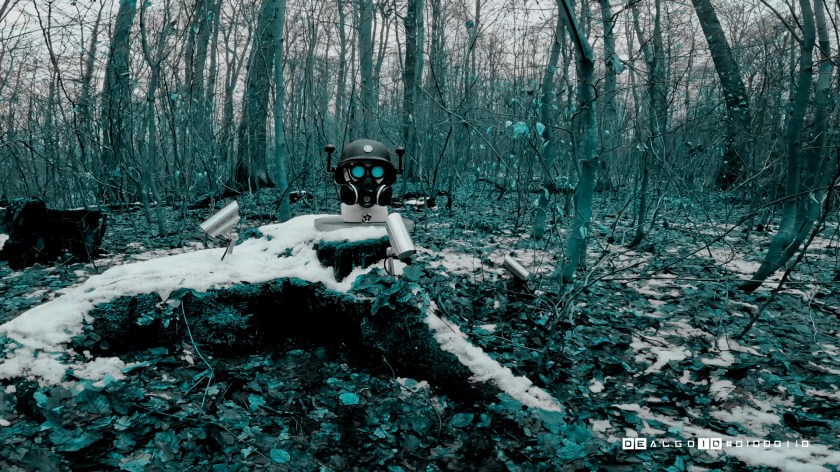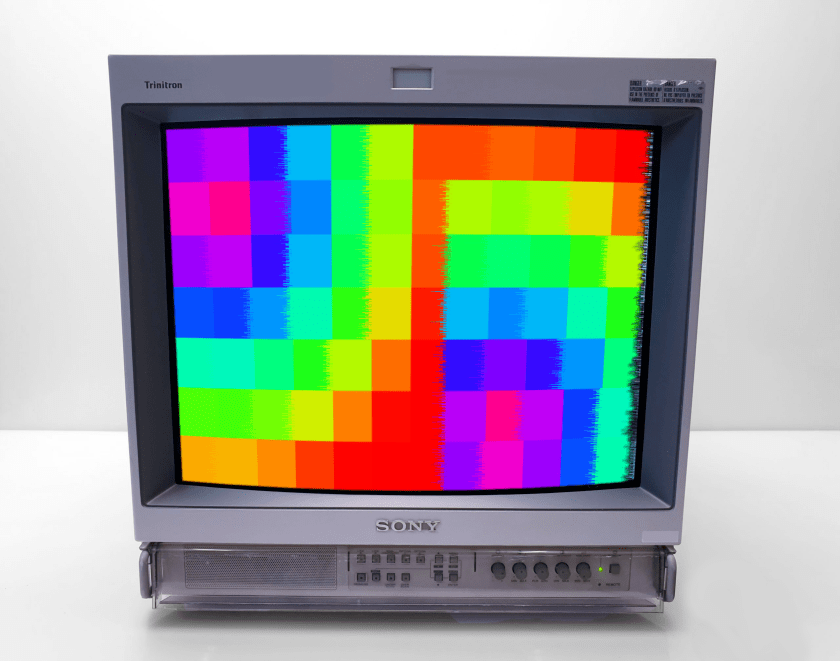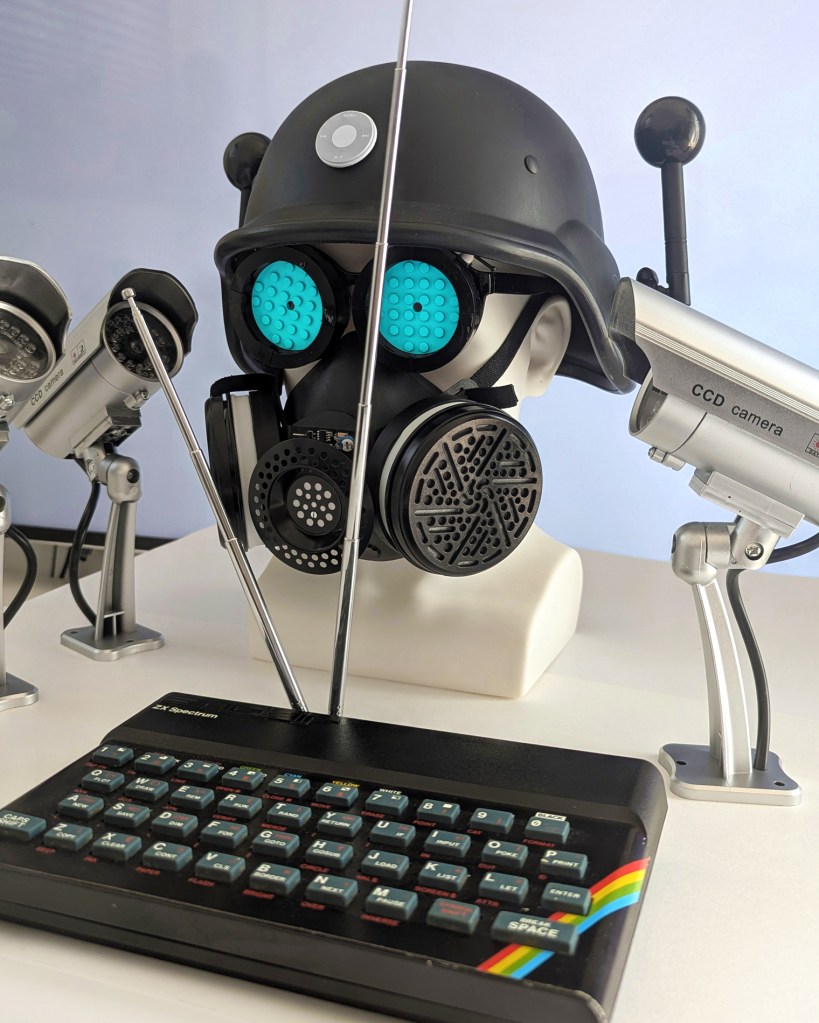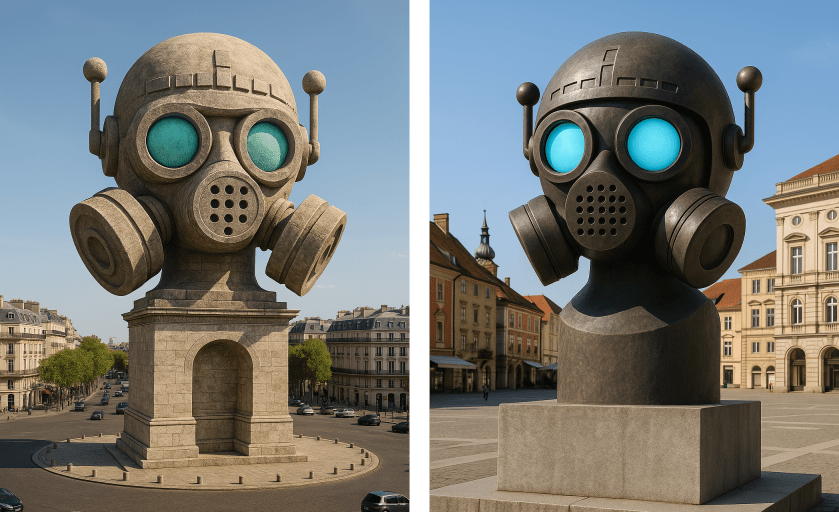
BASIC Non-Art

BASIC Non-Art
by Igor Štromajer
October 2025

– for Sinclair ZX Spectrum 48K

BASIC [Glitch] Code:

Continue reading “BASIC Non-Art”

└⦿✚⦿┘

└⦿✚⦿┘
by Igor Štromajer
2014 – 2025

· new entries, June 2025

intima.org/o-o

└⦿✚⦿┘

└⦿✚⦿┘
by Igor Štromajer
2014 – 2025

· new entries, April 2025

intima.org/o-o/

Continue reading “└⦿✚⦿┘”

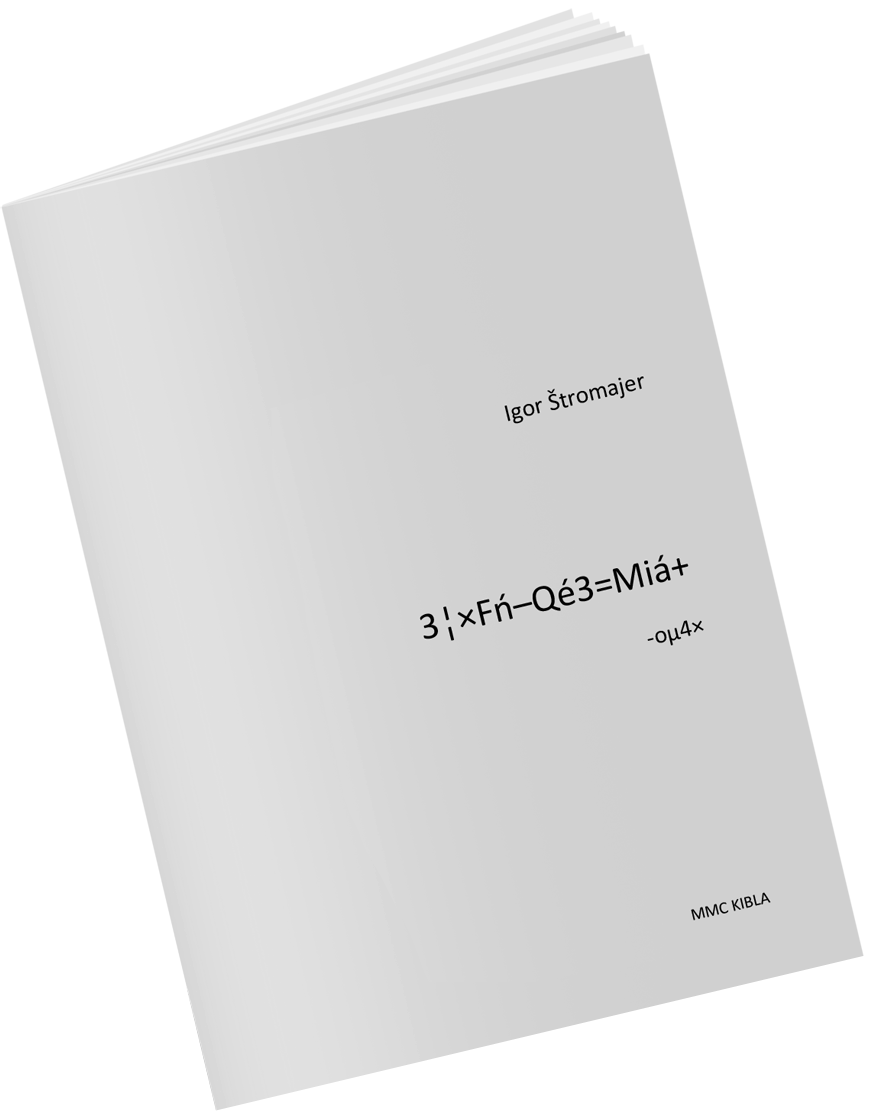
book · 3¦×Fń–Qé3+

Igor Štromajer
3¦×Fń–Qé3=Miá+
-oµ4×

one hundred and one poems
co-written by a human and a machine

The poems were generated between 2013 and 2018 by semi-automatic conversion of .jpg and .gif image files from the author’s deleted net art works [1996-2007; 2011] into text form using the Unicode Encoding Standard.

Kibla, Maribor, 2024

112 pages
softcover, thread-sewn

intima.org/101

b1

Acquisition: since March 2025, the book has been part of the permanent collection of the Maribor Art Gallery.

a2

You’re a human and you can’t read Unicode poems by yourself? No worries, sit back and relax, the computer does it for you.

is200
Igor Štromajer, co-poet · sopesnik · Mitdichter

· contact: igor [at] netzkunst [dot] berlin

lesw

publisher
ACE KIBLA
Maribor, 2024
represented by
Peter Tomaž Dobrila

TOX Edition, Vol. 29, Nr. 78
ISBN 978-961-6304-56-6
UDC 821.163.6-1

human texts revision
Danica Zlatar, Emil Pečnik
design and layout
Joško Bohunsky
producer
Peter Lubej

print
Demago
500 copies

support
The Ministry of Culture of the Republic of Slovenia
Municipality of Maribor
Koda Modro
X-OP

The publication is part of the project 3¦×Fń–Qé3= Miá+ (2012-2024).

21isem2

Continue reading “book · 3¦×Fń–Qé3+”

101.72 MB

aₚ=tF²

u3-banner-c

Štromajer‘s latest series on memory and dead tech: 101.72 MB – electrical machines, computers, phones and other digital devices and their parts that once produced, processed, transmitted and stored his net ⁿᵒⁿ⁻art works (motherboards, sound and graphics cards, disks and magnetic tapes, fans, keyboards, chips, processors, cables, etc.), but are now partially or completely dead, no longer performing their basic functions, carrying only a physical memory of them.

These dead machines are part of the author’s intimate history, the memory which serves to mislead, betray and misrepresent, instead of describing the past. A false memory, however, does not offer an authentic image of the past it speaks of, but always only a misleading, deceptive, fictional and distorted, falsified image.

04_737

Like software, hardware is also changing rapidly, continuously and inexorably, losing its functionality, purpose and, consequently, its content – the (non-)art itself. The author’s basic premise here is that (non-)art is not only hidden in the concept, the idea, i.e., not only in the nominal and declared, but equally also in the tools and machines that produce it. That is why the parts of machines, now more or less dead, are full of intimate memories that have faded and stories that have died.

The series is part of Štromajer‘s de-digitalization processes over several years, from the deletion of his net ⁿᵒⁿ⁻art works back in 2011 to the present.

The only way to liberate ourselves from feudal techno-capitalism is through collective and total de-digitalization.

The title of the work indicates the amount of now deleted net ⁿᵒⁿ⁻art works (101.72 MB of files) produced and processed by these machines and their parts between 1996 and 2007: intima.org/ex.

de-digitalization ≠ re-analogization

02_slm

20 items / dimensions:
· 52 × 52 × 6 cm (6 x)
· 37 × 37 × 6 cm (8 x)
· 27 × 27 × 6 cm (2 x)
· 12 × 12 × 3 cm (4 x)

(dead objects under clear glass, white wooden frames)

u3-banner-ii

Oppera Teorettikka Internettikka, 1999

Oppera Teorettikka Internettikka
· created and performed by Igor Štromajer
(singing HTML and Java in English and Slovenian language)
· a version with remastered sound, February 2024

18 March 1999
Opera and Ballet of the Slovene National Theatre in Ljubljana

18 March 2024 marks the 25th anniversary of Oppera Teorettikka Internettikka, performed in 1999 on the stage of the Opera and Ballet of the Slovene National Theatre in Ljubljana.

Previously, Štromajer first sang the Oppera at the SeaFair – Skopje Electronic Arts Fair at the Museum of Contemporary Art in Skopje (at the invitation of Melentie Pandilovski) in 1998, and at the transmediale in Berlin in January 1999 (at the invitation of Tilman Baumgärtel; in Kulturzentrum Podewil).

574346736

· audio recorded live by Borut Savski (ministry:of:x-periment) and aired on Radio Študent
· produced by Anatom, co-produced by Intima Virtual Base and Kapelica Gallery
· camera by Jurij V. Krpan, photo by Igor Delorenzo Omahen; special thanks to Bojana Kunst, Nataša Kos, Borut Smrekar

Le Pavarotti du HTML – Le Slovene Stromajer crée des opéras en code web; par Marie Lechner (le vendredi 2 février 2001, Libération, Paris)

📖 3¦×Fń–Qé3=Mià+

Igor Štromajer‘s book of computer-generated poetry will be published in autumn this year. It contains one hundred and one unicode poems co-written by a human and a machine between 2013 and 2018.

wi1c

Igor Štromajer
3¦×Fń–Qé3=Miá+
-oµ4×

one hundred and one poems
co-written by a human and a machine

MMC KIBLA, 2024

The poems will be published both as a printed book as well as a USB card.

wi2a

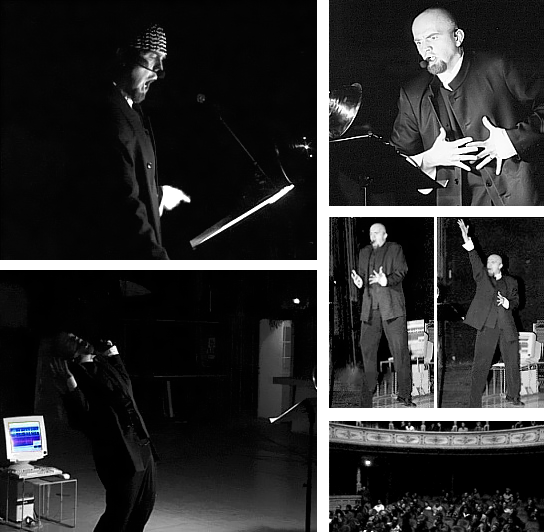
↓ portrait of the poet

wi3

Digital Oxymoron · Quantum Dawn

Digital Oxymoron
group show
Digitalni oksimoron
22 November – 8 December 2023

GT22, Maribor
curator: Irena Borić
producer: Sonda Foundation

Igor Štromajer presents his new work:
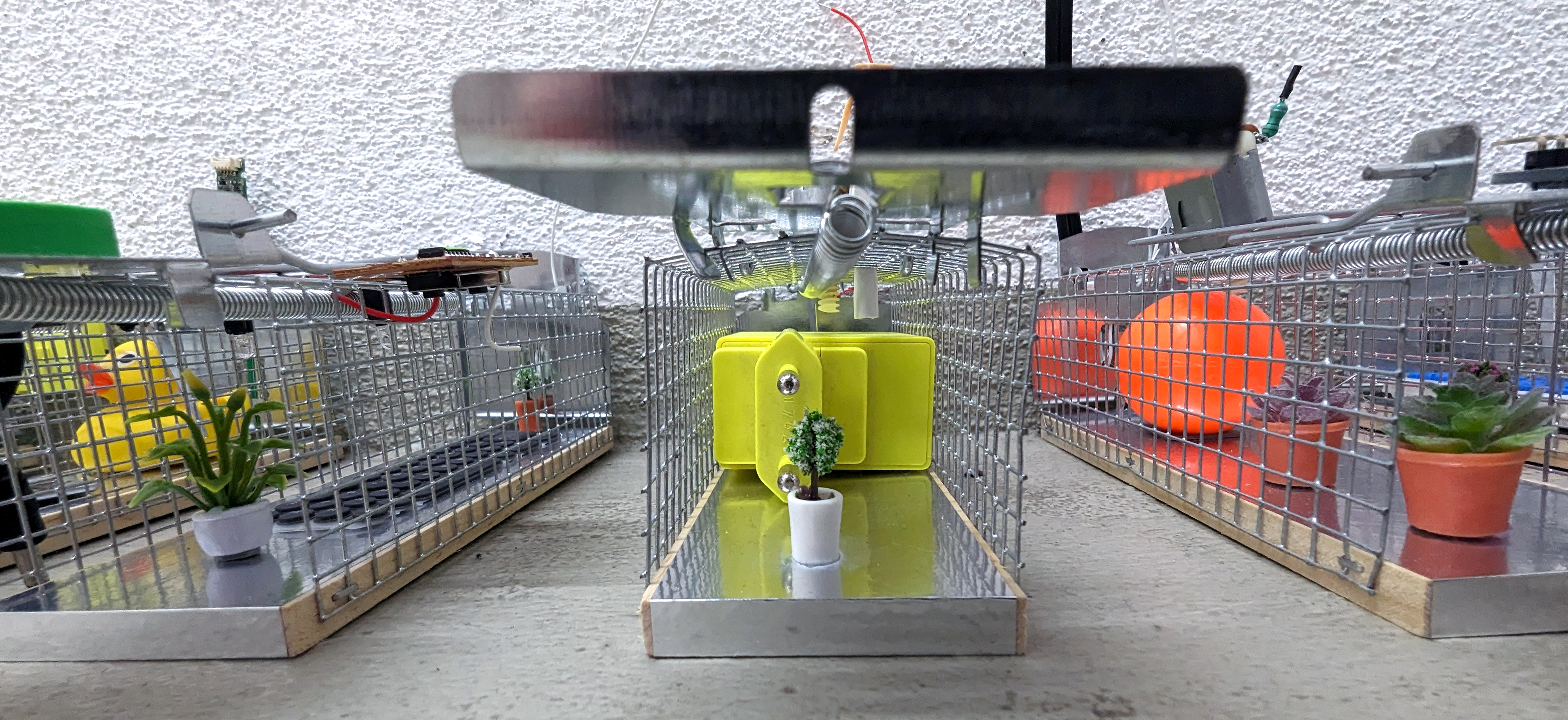
Quantum Dawn or Transcending Political Anxiety
ㄴ (Non)Data Traps

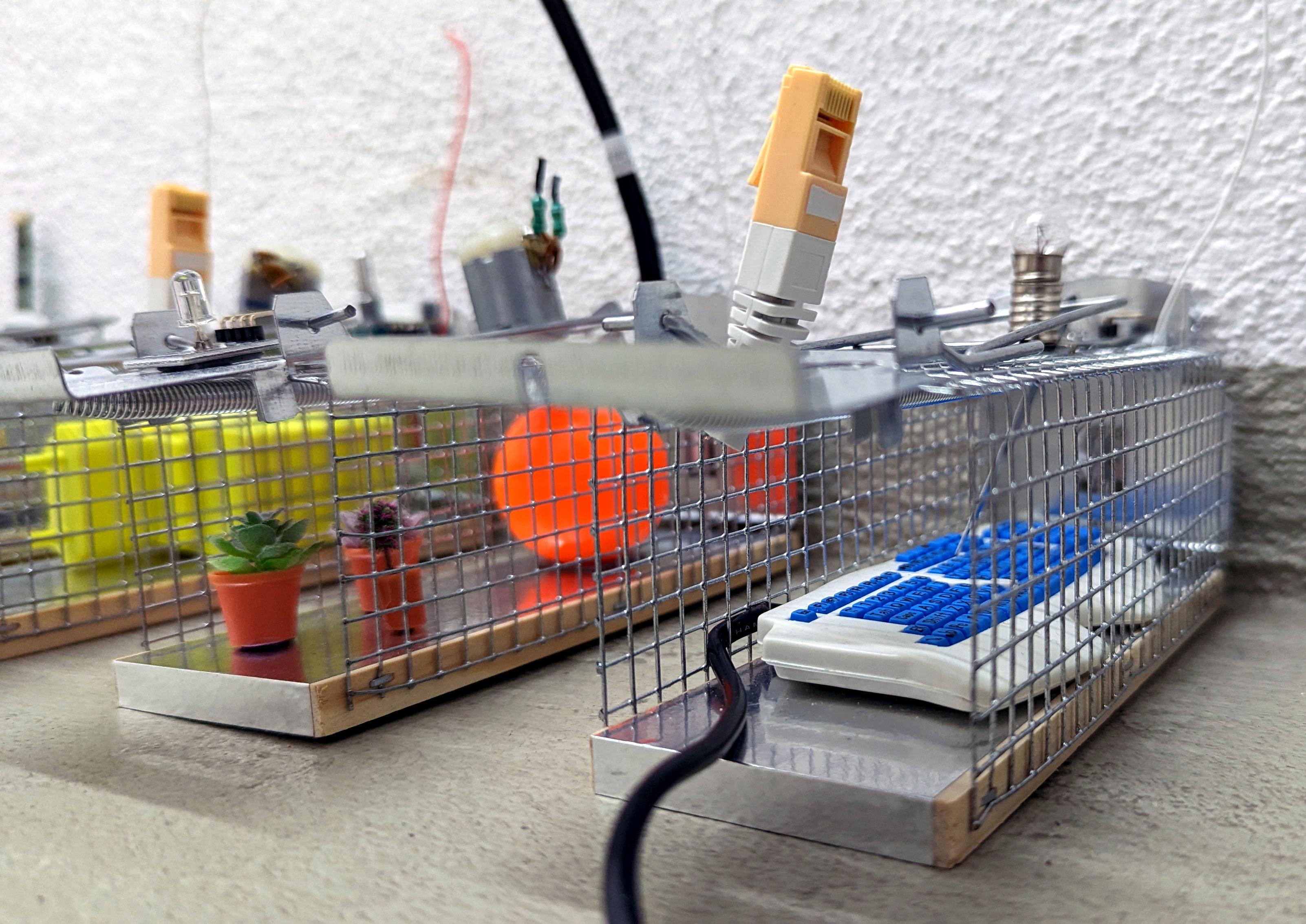
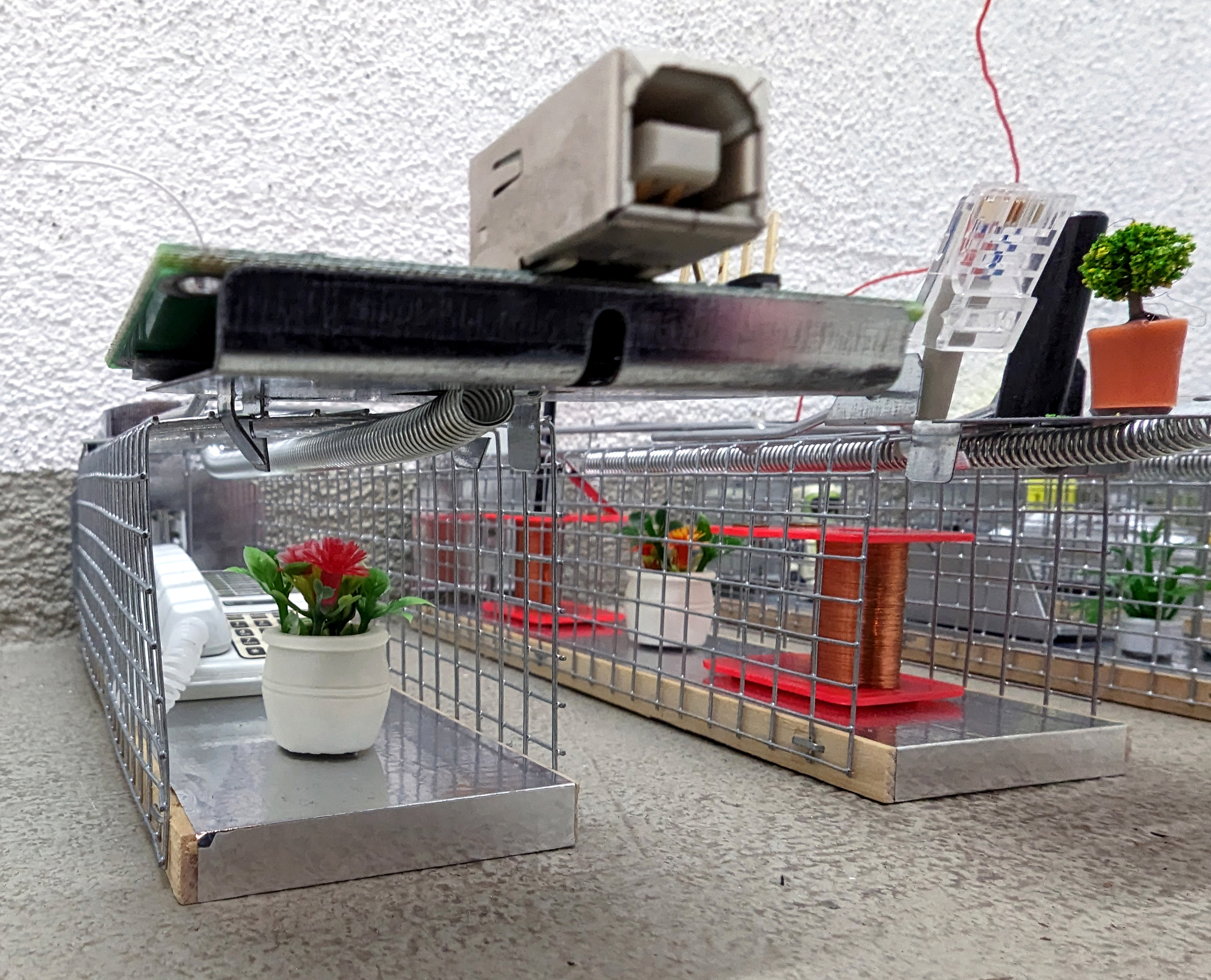
[20 mousetraps for non-mice]

stromajer_kvantna-zarja-13

Kvantna zarja ali Preseganje politične tesnobe
ㄴ (ne)podatkolovke

[mišnice: 20 mišelovk za nemiši]

stromajer_kvantna-zarja-03

stromajer_kvantna-zarja-01

· artists: Format C (Dina & Vedran Gligo), Hrvoje Hiršl, Petra Mrša, Toni Soprano Meneglejte, Andrej Škufca, Igor Štromajer, Ivana Tkalčić

»The exhibition focuses on the materiality of the digital and examines the sense of intangibility that resides somewhere in the speed of a web page load, the reliability of an image stored in the cloud, or the temporary sense of intimacy of a chat that takes place over corporate servers. The screen before us offers immersive worlds where colours, speeds, processing power and storage processes intertwine, while masking the fact that it owes its existence and functioning to metals and minerals. The virtual can easily appear immaterial, as it is a virtual space beyond the keyboard, even though it is a mechanism based on physical premises and has concrete consequences for the environment and society. The dependence of media technology on various geological materials, geophysical forces and vast global networks of energy and supply chains is not obvious. The backdrop of the production and operation of digital technologies supporting complex economic, social and political systems is successfully obscured by ever smaller and more portable digital equipment. But, as in the book Digital Rubbish. A natural history of electronics, professor and researcher Jennifer Gabrys points out, “from silicon to microchip, and from microchip to underground contamination, a complex series of mutations occur that allow electronic technologies to evolve.” As we know, microchips made of silicon are actually the hardware that allows information to be transmitted in the form of electrical signals, or on-off signals. The transmission of information into bits or binary units, where electrical pulses are involved, is based on this very composite of silicon, chemicals, metals, plastics and energy. It is therefore clear that a huge amount of (natural) materials and resources are needed to create the virtual. At the same time, the narrative of the virtuality of the digital is conditioned and influenced by the online exchange and circulation of capital. End-users often fail to understand that digital waste is not only hardware and computer monitors, but also has environmental, social, political and economic consequences. Precisely because the extent of these consequences is not obvious, the exhibition explores the different poetics and politics of digital technologies from our side of the screen.«

— Irena Borić, curator

stromajer_kvantna-zarja-10

»In Quantum Dawn or Transcending Political Anxiety – (Non)Data Traps (2023), Igor Štromajer establishes a humorous dialogue by placing twenty mousetraps in the atypical exhibition space of GT22. Mousetraps everywhere, but not for mice. Like the miniature servers in their cages, the mousetraps are miniature terrariums with bio- and electronic parts (chips, cables, computer parts), and the artist questions our position in relation to the predicaments of new technologies. The term ‘quantum dawn’ also refers to a series of cyber-security exercises that allow financial institutions and the sector as a whole to practice and improve coordination with key industry and government partners to keep the financial market functioning in the event of a systemic cyber-attack. On the other hand, the term ‘non-data’ does not mean that there is no data, but is a physical term and is used in quantum physics to refer to another state of data, as every data has its opposite, i.e. non-data.«

— Irena Borić, curator

stromajer_kvantna-zarja-12

Continue reading “Digital Oxymoron · Quantum Dawn”

29th International Festival of Computer Arts

IFCA – 29th International Festival of Computer Arts
Periodization of space and time through the intermedia

MFRU – 29. Mednarodni festival računalniške umetnosti
Periodizacija prostora in časa skozi intermedijsko

Maribor, 6–13 October 2023
group exhibition opening: 6 October 2023
curator: Aleksandra Gruden

Igor Štromajer participates with two works:

1.

· BE.YOND – & # 1 0 0 1 0 ;
· ON.KRAJ – & # 1 0 0 1 0 ;

by !gor #352;

beyond-1

beyond10010
Photo: Bojan Golčar

beyond-2

Δ S ≥ ∅

1 1 0 1 1 1 3 2 1 1 0 7 1 1 3 9 7 1 0 1 2 9 7 3 1 1 2 7 9 1 1 1 1 1 7 9 2 1 1 0 1 1 1 1 2 7 1 1 1 2 7 1 1 2 1 1 3 1 7 9 0 1 1 1 1 2 1 1 7 2 1 1 1 1 2 1 0 1 2 7 1 3 1 1 2 7 1 3 0 9 2 1 1 1 3 1 2 1 7 1 3 1 1 2 7 1 1 9 2 1 3 9 1 1 2 1 1 1 2 1 1 1 3 2 9 7 1 1 1 3 7 0 0 1 0 0 0 0 0 0 2 9 1 1 3 1 1 2 7 1 1 1 7 1 1

147A1313

147A1318

Photo: Mitja Lorenčič

+ !gor #352;‘s speech at the launch of the satellite/festival · YouTube

2.

· Igor Štromajer in conversation with Igor Štromajer
Artist Talk, 40:26

· Igor Štromajer v pogovoru z Igorjem Štromajerjem
pogovor z umetnikom, 40:26

Vetrinjski dvor
– projekcija: v torek, 10. oktobra 2023 ob 19h

22_1385_STROMAJER_1

“Watch out for false artists. They come to you in artists’ clothing, but inwardly they are lifeless algorithms.”
— Mathview 7:15

“Varujte se lažnih umetnikov, ki prihajajo k vam v umetnikovih oblačilih, znotraj pa so neživi algoritmi.”
— Mathview 7:15

is1

is4

+

tm1

TV Slovenija · Tele M · TV report · 6 October 2023

tm2