

LUD Literatura, maj 2018 | #Poezija

[press, articles, papers, books, media, lectures, references]
Power to the Viewer
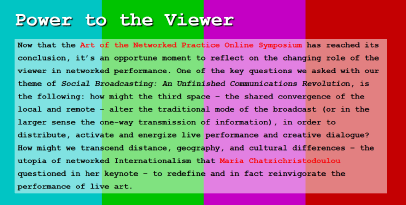
by Randall Packer, thirdspacenetwork.com
April 2018
+ more info:
Art of the Networked Practice – Social Broadcasting: an Unfinished Communications Revolution, a three-day international gathering presenting keynotes, live internet performances, and global roundtable discussions / Online Symposium, March 2018
Yusuke Shono:
世界最大級のデジタルアートのビエンナーレ「THE WRONG」に見る、オンラインキュレーションの可能性
— MASSAGE Magazine, Tokyo, 30.12.2017
↓
Mit Borrás:
Flexible. Invencible. The Wrong
— NEO2, Madrid, 16 enero 2018
↓
Оксана Игошина:
Нет-арт is Wrong
— Артгид / Artguide, Moscow, 19.01.2018

↓
El arte digital tiene su propio espacio en The Wrong Biennale
— Arte al Limite, Santiago de Chile, 10 enero 2018

Galerie ampersand / Gallery Falko Alexander, Cologne
— The Wrong Club: 000.000_i
↓
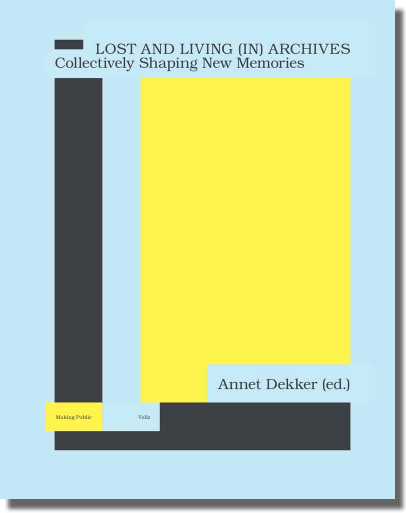
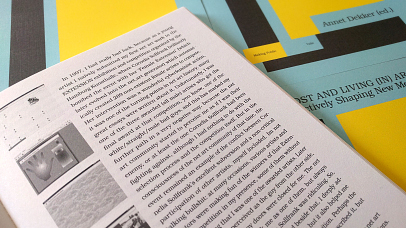
Lost and Living (in) Archives
Collectively Shaping New Memories
Annet Dekker (ed.)
Valiz, Amsterdam, 2017
ISBN: 978-94-92095-26-8

Contributors: Babak Afrassiabi, Dušan Barok, Tina Bastaijan, Nanna Bonde Thylstrup, Özge Çelikaslan, Annet Dekker, Olia Lialina, Luksch, Nicolas Malevé, Aymeric Mansoux, Michael Murtaugh, Josien Pieterse, Ellef Prestsæter, Robert Sakrowski, Stef Scagliola, Katrina Sluis, Femke Snelting, Igor Štromajer, Nasrin Tabatabai
Archives are collections of records that are preserved for historical, cultural and evidentiary purposes. As such, archives considered as sites of a past, a place that contains traces of a collective memory of a nation, a people or a group. Digital archives have changed from stable entities into flexible systems, at times referred to with the term ‘Living Archives’. In which ways has this change affected our relationship to the past? Will the erased, forgotten and neglected be redeemed, and new memories be allowed? Will the fictional versus factual mode of archiving offer the democracy that the public domain implies, or is it another way for public instruments of power to operate? Lost and Living (in) Archives shows that archives are not simply a recording, a reflection, or an image of an event, but that it shapes the event itself and thus influences both the past, present and future.
↓
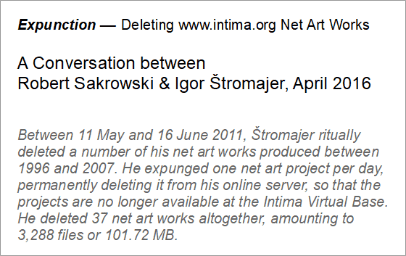
Robert Sakrowski & Igor Štromajer: Expunction / Deleting Net Art Works – A Conversation
↓
↓
The series ‘Making Public’ investigates ‘the public’, the civil domain where space, knowledge, values and commodities are shared. What does this notion of ‘public’ mean? How does this domain change under the influence of social, political and technological tendencies? Where are the boundaries of ‘the public’ and how are they determined? What interests are involved in this? What forms of responsibility and solidarity does ‘the public’ invoke? And how do artists and culture critics shape the debate on these issues?
Metric Culture: The Quantified Self and Beyond
International Conference, 7-9 June 2017
Organised by: Btihaj Ajana, AIAS and King’s College London
Aarhus Institute of Advanced Studies, Denmark
Dr Elena Marchevska:
Intimacy without cause: self-tracking and the quantified self in the net-art work of Igor Štromajer
London South Bank University, UK
Panel: Quantified Self and capitalist value
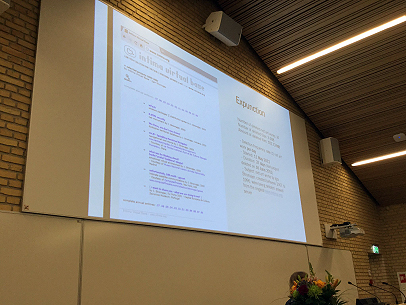
Photo: Christopher Till ©
+ Programme (PDF)
Abstract:
Data is money, data is power, data is everything and everything can be data. Yet data is simply a set of information on a world that is messy, irrational, unstable, and emotional. In the V2 catalogue for the show ‘Data in the 21st Century’, the curator states that: ‘The rise of so-called big data and the emergence of technologies that are able to quantify our every move, preference and behaviour, have demonstrated where the friction lies between the unpredictable reality that we live in and the desire to capture it in data.” (2015).
The paper will look into the performative work of Igor Štromajer and his projects ‘Expunction’ (2012) and ‘Multifeminist studies’ (2016) run by/on his Intima Virtual Base production site. Through these projects he is working on simple technological solutions for handling data and emotional strategies. His role of being both performer within the work and simultaneously viewing oneself from an external position (watching yourself on screen to see how you fit in) in order to gauge avenues for proceeding is both disorienting and extremely engaging. As Štromajer summarises: ‘’’Intimacy without a cause’ today is the most radical resistance to capital. ‘ (2005:149) Both projects raise questions about temporality, duration and availability of net art project that deal with data which change over time and slowly, but persistently lose their utility and, accordingly, their content.
© Elena Marchevska
Voicetracks
Attuning to Voice in Media and the Arts
By Norie Neumark
The MIT Press, Hardcover, 232 pp., 6 x 9 in, 26 b&w illus., May 2017, ISBN: 9780262036139 (eBook, May 2017, ISBN: 9780262339827)
#
In her new book, Norie Neumark also writes about Ballettikka Internettikka.

Moved by the Aboriginal understandings of songlines or dreaming tracks, Norie Neumark’s Voicetracks seeks to deepen an understanding of voice through listening to a variety of voicing/sound/voice projects from Australia, Europe and the United States. Not content with the often dry tone of academic writing, the author engages a “wayfaring” process that brings together theories of sound, animal, and posthumanist studies in order to change the ways we think about and act with the assemblages of living creatures, things, places, and histories around us.
Neumark evokes both the literal—the actual voices within the works she examines—and the metaphorical—in a new materialist exploration of voice encompassing human, animal, thing, and assemblages. She engages with artists working with animal sounds and voices; voices of place, placed voices in installation works; voices of technology; and “unvoicing,” disturbances in the image/voice relationship and in the idea of what voice is. She writes about remixes, the Barbie Liberation Organisation, and breath in Beijing, about cat videos, speaking fences in Australia, and an artist who reads (to) the birds. Finally, she considers ethics and politics, and describes how her own work has shaped her understandings and apprehensions of voice.
Norie Neumark, a sound and media artist, is Honorary Professorial Fellow at Victorian College of the Arts, University of Melbourne, and Emeritus Professor at La Trobe University in Melbourne. She coedited At a Distance: Precursors to Art and Activism on the Internet and VOICE: Vocal Aesthetics in Digital Arts and Media, both published by the MIT Press.
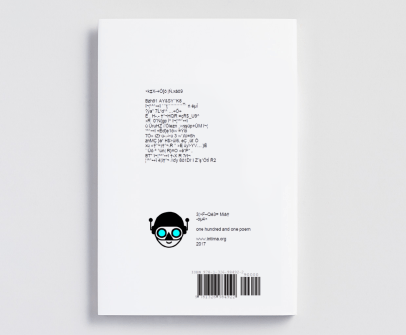
Igor Štromajer
3¦×Fń–Qé3= Miá†
— one hundred and one poem

Paperback, 14.8 cm x 21 cm, 108 Pages
ISBN: 978-1-326-98492-2
Prints in 3-5 business days.
€5.86
lulu.com/spotlight/intima_org
↓
×k‡X‹-+Ô[ô |Ń‚xăö9
Bzh91 AY&SY’˙K8 _
ﬦ¹^°•÷ï ˙˙˙ţ˙˙˙˙˙˙˙˙˙˙˙˙˙ ń› ěµ Î
?ýa” 7Ĺ¹d¹^ …÷Ő÷
É ¸ H-.- †°¬HQR =çŔ$_U9^
»Ŕ € 0”Ń{g⚯p ĺ^ ﬦ¹^°•÷ï
ů ŰruHZ //Őlezn ¸wsşűp+ŮM ﬦ
¹^°•÷ï ÷Ëď}ę1öw =Ýĺö
7Ó» íZŕ ú-.->ú 3 w’)ľű=6h
znMÇ }á¹ H$>ůî6‚ eÇ ¸űť Ô
xú «†°¬)†°¬.Ŕ ° »Ę⚯ úy>YV… }Ě
˝€ Ůô ª °ún( R}=O «ë*P*⁷ ‚
BT” ﬦ¹^°•÷ï †-X R 7rt¬
¦¹^°•÷ï 4¦i†°¬ //ďy€ 8ô1Dŕ I Z¨ş°ŐtÎ Ŕ2
↑
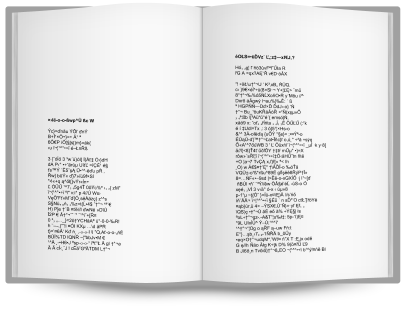
3¦×Fń–Qé3= Miá†
-oµ4×
One hundred and one poem by Igor Štromajer, 2017.
Based on www.intima.org/miat, 2012 and www.intima.org/3xfnqe3miat.pdf, 2016.
ISBN: 978-1-326-98492-2
IN/CN: 00936-30973
Written in Hamburg and in Frankfurt am Main, from 2012 to 2017.
Published by www.intima.org, 2017.

+ 0§n–3¦é×F= Miá†, audio/eBook by Igor Štromajer, 2012
Pogled unatrag: godina u vizualnim umjetnostima
Bojan Krištofić, kulturpunkt.hr
31.12.2016
Make Love Not Art
Vizkultura.hr, 5. 9. 2016
[interview in Croatian]
Razgovor s Igorom Štromajerom, pseudo-/para-umjetnikom ludičkog trenutka interneta
 intima.org · Igor Štromajer